
Design guide - What you need to know to design a kitchen
Disclaimer
As an interior designer, I’ve created kitchens in every project and always keep in mind countless aspects and nuances. Some of them you probably know, some are very subtle, and some I learned only through experience. I’ve put together this checklist to help you structure all this information—whether you’re designing with a professional, doing it yourself, or working with a kitchen company. The better input information you have, the better results you’ll get.
If you have any suggestions or questions, feel free to contact me via email at andrey.interior.design@gmail.com
or on Instagram @andrey_the_designer.

Fridge
Built-in
looks as a part of a kitchen
precise size 60x60cm (23.6x23.6’’)
cabinet height is 200cm (78.7’’)
can place 2 next to each other for extra space
a lot of various models
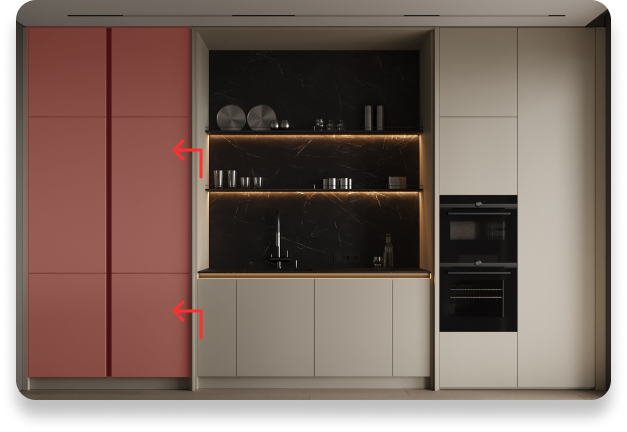
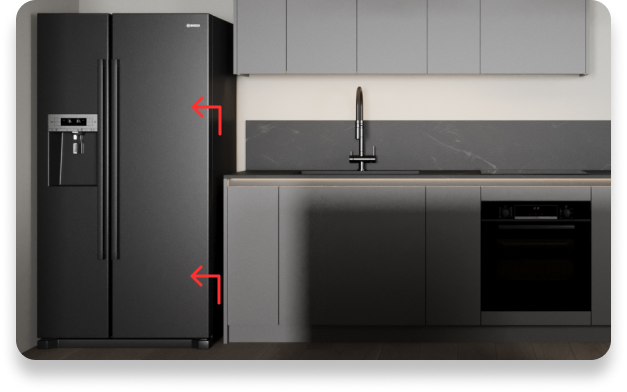
Standalone
can fit more groceries
larger than built-in
larger depth (can place in line with kitchen cabinets
size depends on the model
needs gaps on both sides and above for ventillation
Countertop
Laminated
particle board base
4cm (1.5’’) thick
covered with plastic
cheap
less resist than stone
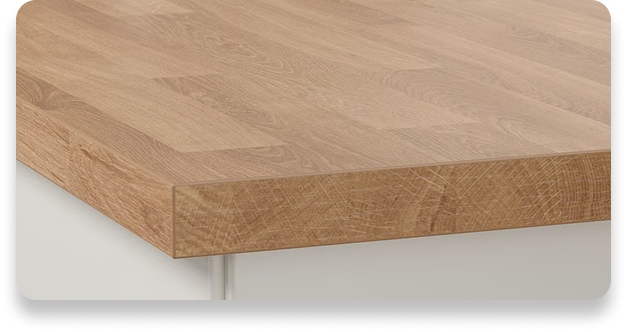
Acrylic stone
can be thinner than laminated - up to 2cm (0.8’’)
medium price
sink might be settled underneath
seamless
small textures
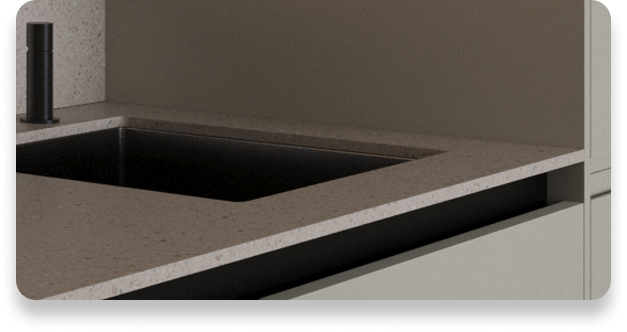
Quartz stone / Dekton
can be thinner than acryllic stone - up to 1.2cm (0.47’’)
Most resilient (water, fire proof)
Various textures
Seamless (within a slab of 300x140cm (118x55’’))
most expensive
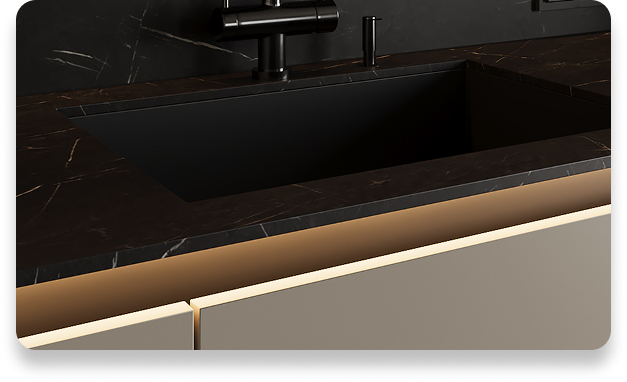
Sink
Standard
can be installed in any countertop
installed on top of a counter
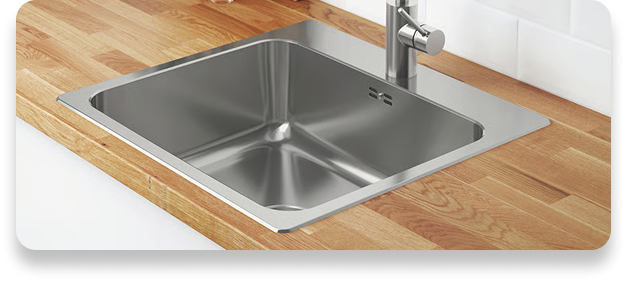
Under a countertop
can be installed with acrylic or quartz counterop
installed under a counterop
easy to clean worktop
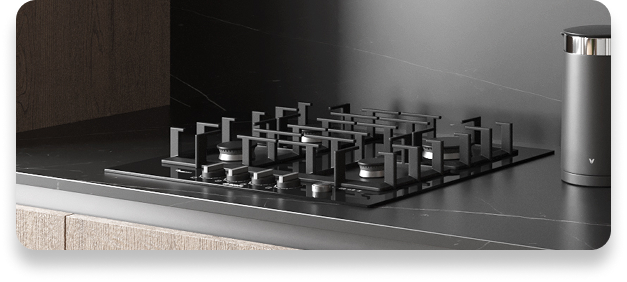
Cooktop
Standard electric/gas
cheap
easy to maintain
be aware of a hot surface
not convenient in cleaning
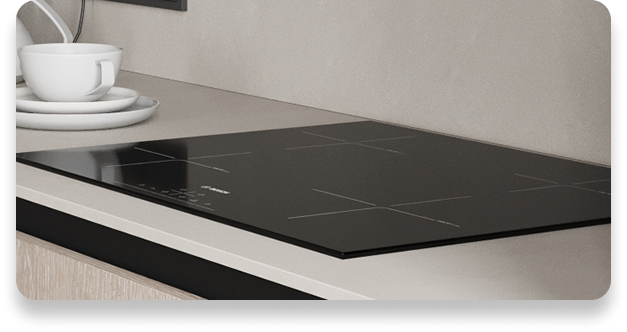
Induction
heat cookware, not surface
easy to clean
needs a bit of space underneath a countertop
not the cheapest but affordable
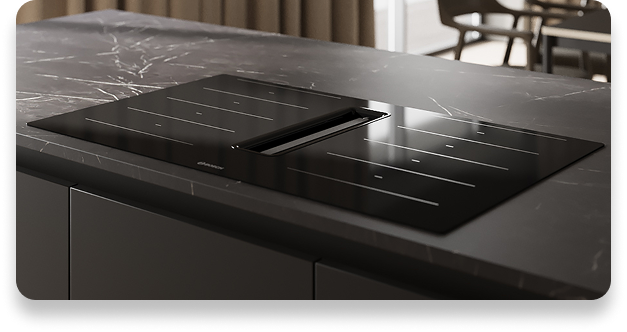
With integrated ventillation
can place on a kitchen island
don’t need to add a hood above
expensive
very efficient ventilation
air goes through a coal filter
Face materials
Particle board
cheapest
limited variations of colors and textures
laminated
can’t be with any insets, only flat
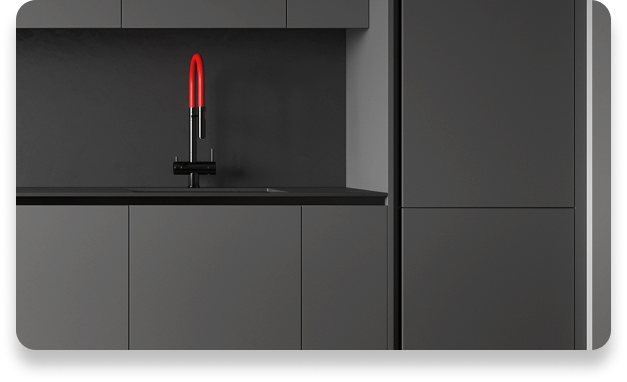
MDF
more expensive
more resilient to water
can be painted (any color), laminated, covered with wood or stone veneer
last longer
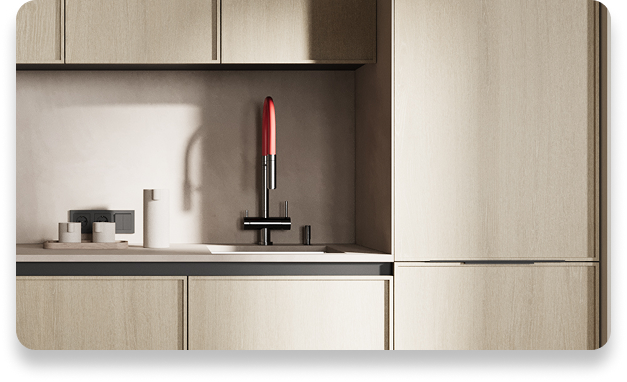
Door opening
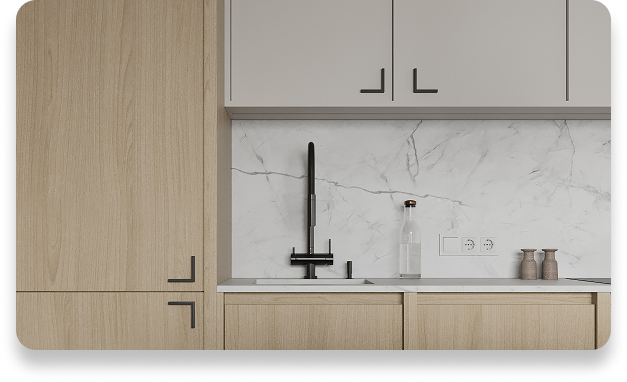
Handles
very easy to install
a lot of options
cheap (except custom ones)
Integrated
only with MDF
can be made in one style for all doors + fridge
doors go in line with the kitchen
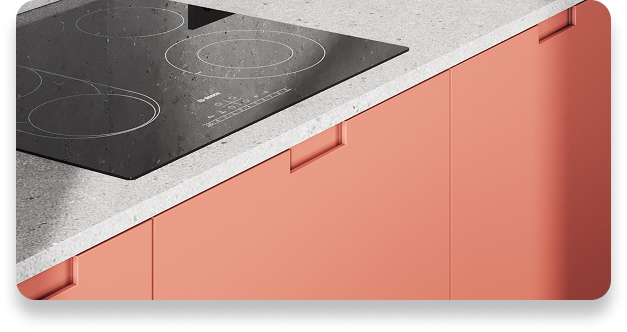
Gola profile
with any doors
opening by pulling the door
can add a LED light below a countertop
can be horizontal and vertical (for fridge or any tall cabinet)
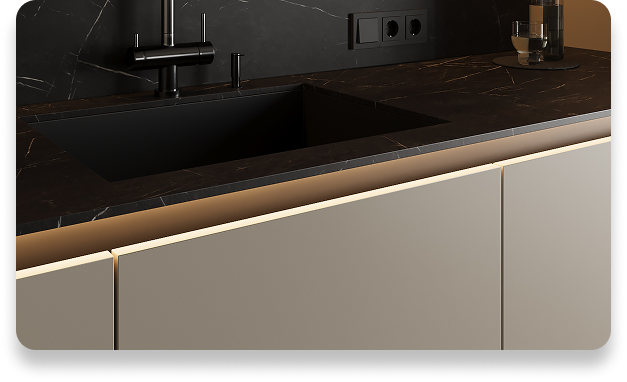
Push-to-open
very useful for tall cabinets with oven and MW
good for upper cabinets
very expensive for dishwasher and fridge cabinets
don’t last for long
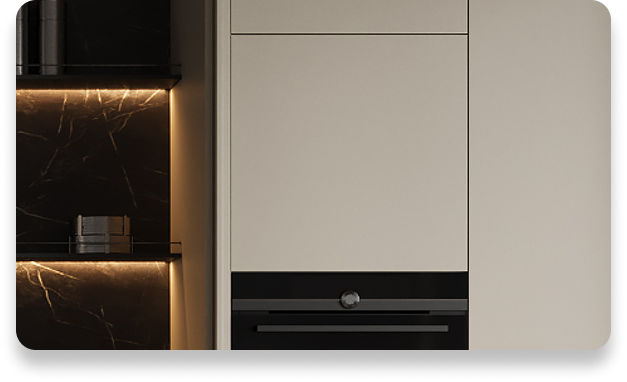
Offset opening for upper cabinets (2cm (0.78’’) lower)
height of the door is 2cm (0.78’’) longer that the cabinet height
opening by pulling the door
very easy to install
cover a built-in hood and LED light
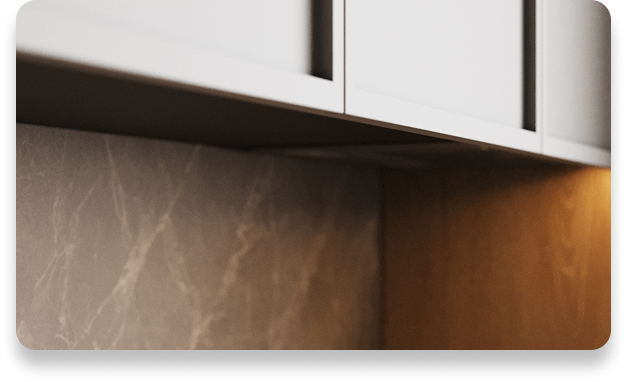
Backsplash
Ceramic tiles
cheapest
small tiles
fragile
easy to maintain
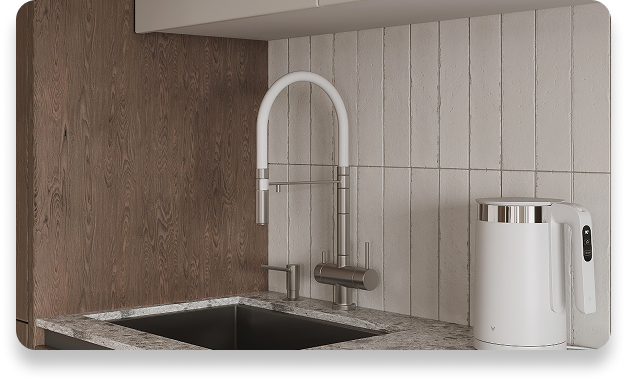
Porcelain tiles
affordable
robust
bigger sizes
easy to maintain
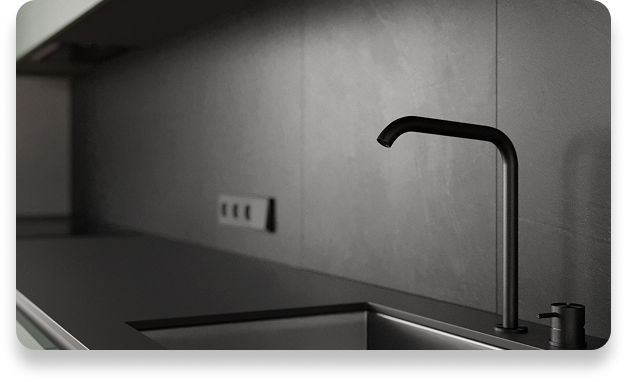
Quartz stone / Dekton
can be the same as a countertop
seamless up to 310cm (122’’)
robust, resilient
expensive
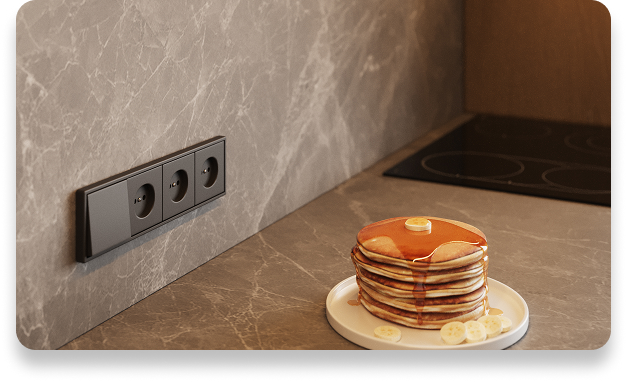
LED light wall
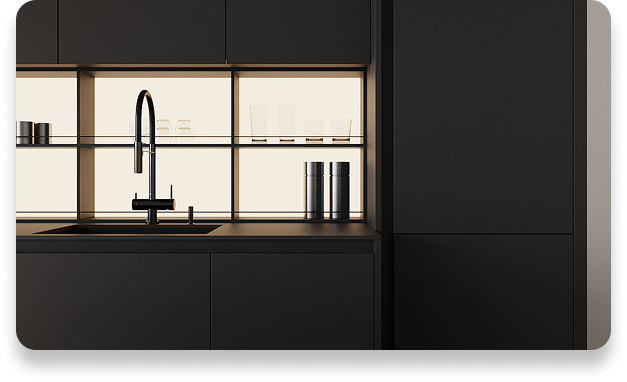
LED light behind translucent material (glass, stone)
not easy to install
need to place sockets anywhere else (bottom of upper cabinets for example)
stunning look
Hood
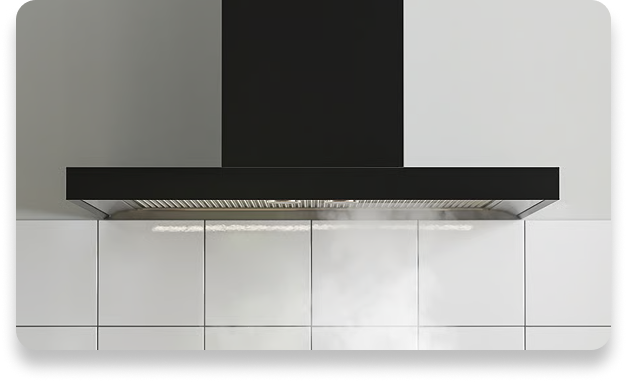
Standalone
efficient
placed separately from upper cabinets
Built in an upper cabinet
affordable
efficient
hidden
can use upper cabinets space (particularly)
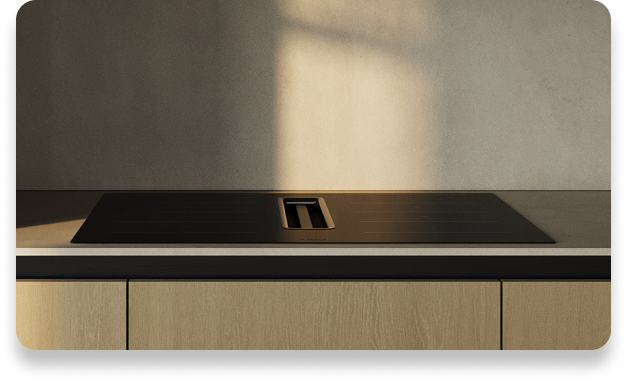
Inside a cooktop
one cooktop is cheaper than a cooktop + a hood
hood is closer to a cookware
efficient
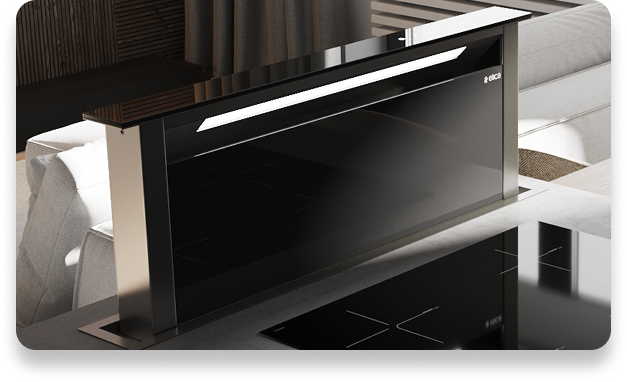
Built in a countertop
much more expensive
needs additional space
hidden
Ergonomics
Order
consider the order: fridge → sink → cooking space → cooktop
place a sink closer to the main drain (place dishwasher right after the sink)
place a socket, drain and water pipes for a dishwasher in the cabinet with sink (not behind the dishwasher)
don’t place a dishwasher right next to the corner (L-shape kitchen)
Distances
min 120cm (47.2’’) between kitchen cabinets and a dinner table or a kitchen island
min 60cm (23.6’’) between a sink and a cooktop
60cm (23.6’’) between a countertop and upper cabinets
min 1cm (0.4’’) between the top of upper cabinets (to hang the cabinets)
Recommendations
use particular board for inside elements of kitchen cabinets and MDF for facing elements - it’s much cheaper than making all the kitchen from MDF
use kitchen taps with a flex hose - it makes sink rinsing convenient
if you want to have a garbage disposal or water filters, keep in mind that it needs additional space under the sink